
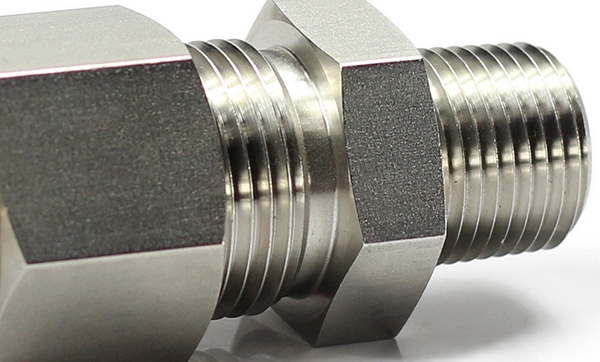
Pengoperasian sistem fluida industri bergantung pada kerja sama setiap komponen yang mengantarkan fluida proses Anda ke tujuannya. Keamanan dan produktivitas pabrik Anda bergantung pada sambungan bebas kebocoran antar komponen. Untuk mengidentifikasi fitting yang tepat untuk sistem fluida Anda, pertama-tama pahami dan identifikasi ukuran dan jarak ulirnya.
Dasar Thread dan Terminasi
Bahkan para profesional berpengalaman pun terkadang kesulitan mengidentifikasi ulir. Penting untuk memahami istilah dan standar umum terkait ulir dan terminasi untuk membantu mengklasifikasikan ulir tertentu.
Jenis ulirUlir luar dan ulir dalam mengacu pada posisi ulir pada sambungan. Ulir luar menonjol di bagian luar sambungan, sedangkan ulir dalam berada di bagian dalam sambungan. Ulir luar dimasukkan ke dalam ulir dalam.
MelemparPitch adalah jarak antar ulir. Identifikasi pitch bergantung pada standar ulir tertentu, seperti NPT, ISO, BSPT, dll. Pitch dapat dinyatakan dalam ulir per inci dan mm.
Lampiran dan dedendumTerdapat puncak dan lembah pada benang, yang masing-masing disebut addendum dan dedendum. Permukaan datar antara ujung dan pangkal disebut flank.
Identifikasi jenis ulir
Langkah pertama untuk mengidentifikasi ukuran dan jarak ulir adalah memiliki alat yang tepat, termasuk jangka sorong, pengukur jarak ulir, dan panduan identifikasi jarak ulir. Gunakan alat-alat tersebut untuk menentukan apakah ulir tersebut tirus atau lurus. [Diagram ulir tirus vs ulir lurus]
Ulir lurus (juga disebut ulir paralel atau ulir mekanis) tidak digunakan untuk penyegelan, tetapi digunakan untuk mengencangkan mur pada badan konektor casing. Mereka harus bergantung pada faktor lain untuk membentuk segel kedap bocor, sepertigasket, O-ring, atau kontak logam ke logam.
Ulir tirus (juga dikenal sebagai ulir dinamis) dapat disegel ketika sisi gigi ulir luar dan dalam ditarik bersama. Diperlukan penggunaan sealant ulir atau pita ulir untuk mengisi celah antara ujung gigi dan akar gigi guna mencegah kebocoran cairan sistem pada sambungan.
Ulir tirus membentuk sudut terhadap garis tengah, sedangkan ulir sejajar dengan garis tengah. Gunakan jangka sorong untuk mengukur diameter ujung ke ujung ulir luar atau ulir dalam pada ulir penuh pertama, keempat, dan terakhir. Jika diameter bertambah pada ujung jantan atau berkurang pada ujung betina, ulir tersebut tirus. Jika semua diameter sama, ulir tersebut lurus.
Mengukur diameter ulir
Setelah Anda memastikan apakah Anda menggunakan ulir lurus atau tirus, langkah selanjutnya adalah menentukan diameter ulir. Sekali lagi, gunakan jangka sorong untuk mengukur diameter ulir luar atau dalam nominal dari bagian atas gigi ke bagian atas gigi. Untuk ulir lurus, ukur setiap ulir penuh. Untuk ulir tirus, ukur ulir penuh keempat atau kelima.
Pengukuran diameter yang diperoleh mungkin berbeda dari ukuran nominal ulir yang tercantum. Perubahan ini disebabkan oleh toleransi industri atau manufaktur yang unik. Gunakan panduan identifikasi ulir dari produsen konektor untuk memastikan bahwa diameter sedekat mungkin dengan ukuran yang benar. thread-pitch-gauge-measurement-diagram
Tentukan nada
Langkah selanjutnya adalah menentukan jarak ulir. Periksa ulir terhadap setiap bentuk menggunakan pengukur jarak ulir (juga dikenal sebagai sisir) hingga ditemukan kecocokan yang sempurna. Beberapa bentuk ulir Inggris dan metrik sangat mirip, jadi mungkin membutuhkan waktu.
Tetapkan standar nada
Langkah terakhir adalah menetapkan standar pitch. Setelah jenis kelamin, tipe, diameter nominal, dan pitch ulir ditentukan, standar identifikasi ulir dapat diidentifikasi dengan panduan identifikasi ulir.
The operation of industrial fluid systems depends on the cooperation of every component that delivers your process fluids to their destination. Your plant's safety and productivity depend on leak-free connections between components. To identify the right fitting for your fluid system, first understand and identify its size and thread spacing.
Thread and End-Connection Basics
Even experienced professionals sometimes have difficulty identifying threads. It is important to understand the general terms and standards regarding threads and terminations to help classify a particular thread.
Thread types: Male and female threads refer to the location of the threads on a connection. Male threads are on the outside of a connection, while female threads are on the inside. A male-threaded end is inserted into a female-threaded end.
Pitch is the distance between threads. How pitch is specified depends on the thread standard, such as NPT, ISO, or BSPT. It may be expressed in threads per inch or millimeters.
Addendum and dedendum: Threads have crests and roots, known as the addendum and dedendum, respectively. The surface between the crest and root is called the flank.
Identify the thread type
The first step to identifying thread size and pitch is to have the right tools, including a caliper, thread pitch gauge, and thread pitch identification guide. Use these tools to determine whether the thread is tapered or straight. [Taper thread vs straight thread diagram]
Straight threads (also called parallel threads or mechanical threads) are not used for sealing, but are used to tighten the nuts on the casing connector body. They must rely on other factors to form a leak-tight seal, a third-sketch, O-ring, or metal-to-metal contact.
Tapered threads (also known as dynamic threads) can be sealed when the outer and inner thread tooth sides are pulled together. It is necessary to use thread sealant or thread tape to fill the gap between the tip of the tooth and the root of the tooth to prevent leakage of system fluid at the connection.
Tapered threads form an angle to the center line, while threads are parallel to the center line. Use a caliper to measure the end-to-end diameter of the outer thread or inner thread on the first, fourth, and last full threads. If the diameter increases at the male end or decreases at the female end, the thread is tapered. If all diameters are the same, the thread is straight.
Measuring thread diameter
Once you have confirmed whether you are using straight or tapered threads, the next step is to determine the thread diameter. Again, use a caliper to measure the nominal outer or inner thread diameter from the top of the tooth to the top of the tooth. For straight threads, measure each full thread. For tapered threads, measure the fourth or fifth full thread.
The diameter measurements obtained may differ from the listed nominal thread sizes. These changes are due to unique industrial or manufacturing tolerances. Use the connector manufacturer's thread identification guide to ensure that the diameter is as close to the correct size as possible. thread-pitch-gauge-measurement-diagram
Determine the pitch
The next step is to determine the thread spacing. Check the threads against each shape using a thread gauge (also known as a comb) until a perfect fit is found. Some English and metric thread shapes are very similar, so it may take some time.
Identify the thread standard
The final step is to set pitch standards. Once the gender, type, nominal diameter and pitch of the thread are determined, the thread identification standard can be identified with the thread identification guide.